Ignaz Semmelweis: The Savior of Mothers & Pioneer of Handwashing
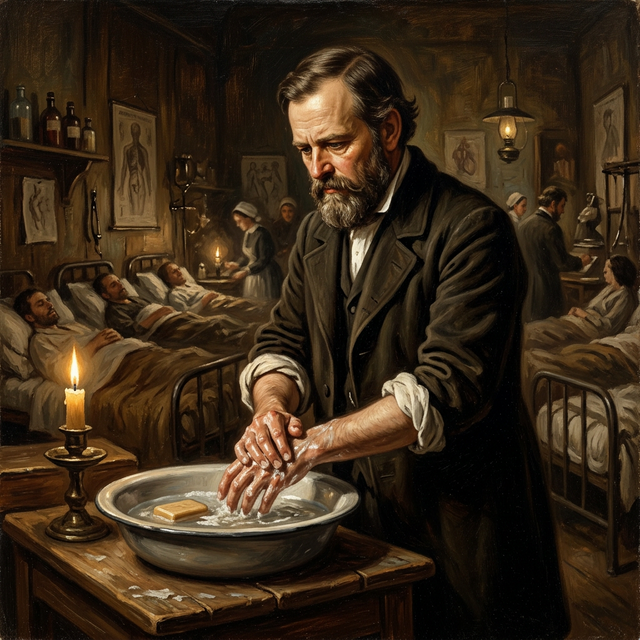
In the history of modern medicine, few figures were as tragically misunderstood—and ultimately vindicated—as Ignaz Semmelweis. Known today as the “Savior of Mothers,” Semmelweis was a Hungarian physician who pioneered antiseptic procedures decades before germ theory was widely accepted.
His simple but revolutionary idea—mandatory handwashing—dramatically reduced maternal mortality. Yet, during his lifetime, his findings were ridiculed, rejected, and ignored. This blog explores the life, discovery, struggle, and legacy of Ignaz Semmelweis, along with the enduring impact of his work on modern infection control.
The Deadly Mystery of Childbed Fever
In the mid-1800s, childbirth in hospitals was extremely dangerous. Maternal mortality rates for puerperal fever (childbed fever) ranged between 10% and 30% in European maternity wards. At the Vienna General Hospital, Semmelweis noticed a disturbing pattern:
- The First Clinic (Physician-run): Had a much higher death rate.
- The Second Clinic (Midwife-run): Had significantly fewer deaths.
- Home Births: Women delivering at home rarely developed the fever.
This contradiction challenged the "miasma theory" (the idea that "bad air" caused disease). Semmelweis looked for a physical cause.
The Breakthrough: "Cadaveric Particles"
The turning point came in 1847 when Semmelweis’s colleague, Jakob Kolletschka, died from an infection after being accidentally cut during an autopsy. His symptoms mirrored those of women dying from childbed fever.
Semmelweis concluded that doctors and medical students were carrying infectious material—which he called “cadaverous particles”—directly from the autopsy room to the maternity patients.
The Solution: Chlorinated Lime Handwashing
Semmelweis ordered all doctors and students to wash their hands with a chlorinated lime solution before examining patients. The results were extraordinary and provided the first real evidence for preventive medicine.
Impact of Handwashing on Mortality Rates
- Before Handwashing (1846): ~11.4% Mortality Rate (First Clinic)
- After Handwashing (1848): ~1.27% Mortality Rate (First Clinic)
Rejection by the Medical Establishment
Despite the data, Semmelweis faced intense opposition. Physicians were offended by the implication that they were the ones causing death. Because germ theory had not yet been developed by Louis Pasteur or Joseph Lister, the medical elite refused to accept his findings.
His communication style became increasingly confrontational as he watched more women die needlessly, leading to his professional isolation.
The Semmelweis Reflex and Legacy
Today, the term “Semmelweis reflex” describes the automatic rejection of new knowledge because it contradicts established norms. Though he died in an asylum in 1865 from a septic infection, he is now recognized as:
- A pioneer of antiseptic medical practice.
- A foundational figure in hospital hygiene.
- A martyr of scientific resistance.
Why Ignaz Semmelweis Still Matters Today
During the COVID-19 pandemic, global health authorities emphasized hand hygiene as a primary defense. Modern hospitals and surgical protocols all stand on the foundation laid by Semmelweis. His story teaches us that data-driven medicine saves lives and that scientific progress often requires the courage to challenge the status quo.
(Check out my other post on Training Your Brain for Success to see how data-driven decisions impact development.)
Final Thoughts
Ignaz Semmelweis did not seek fame; he sought to save lives. His work reshaped medical science forever, proving that the simplest actions—like washing one’s hands—can be the most powerful tools in healthcare.
Subscribe to the newsletter
Get the latest posts delivered right to your inbox.