The Science of Training Your Brain for Success
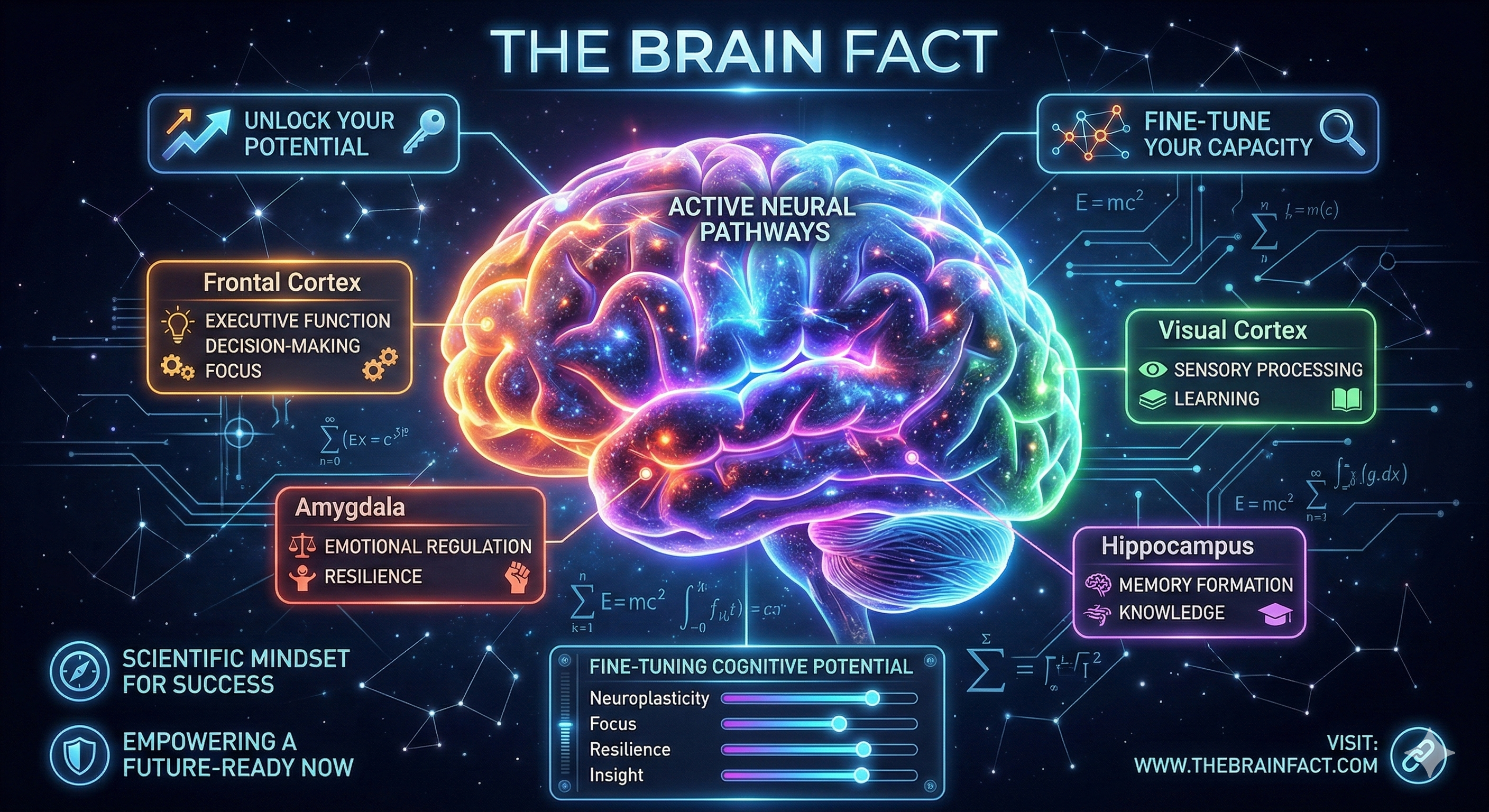
Modern neuroscience confirms a powerful truth: you are not underusing your brain — you are under-training it.
The long-standing "10% brain usage" myth has been conclusively debunked through functional MRI and PET imaging research. Studies show that nearly all regions of the brain remain active across daily tasks, even during sleep. The real issue is not inactivity; it is inefficient neural wiring.
In today's performance-driven world, cognitive success is determined by how effectively you engage in Neuroscience Optimization, Brain Plasticity Training, and structured Neuroplasticity Exercises.
This is the science of training your brain for success.
The Biological Foundation: Neuroplasticity
At the core of Brain Performance Science lies neuroplasticity — the brain's ability to reorganize its synaptic connections in response to learning, stress, novelty, and environmental input.
Neuroplasticity is not motivational theory. It is measurable biology.
When exposed to new environments, complex tasks, emotional engagement, and cognitive challenge, the brain increases production of neurotrophic factors such as Brain-Derived Neurotrophic Factor (BDNF). These proteins promote:
- Synaptic strengthening
- Dendritic branching
- Neural efficiency
- Cognitive flexibility
This process forms the foundation of modern Brain Rewiring Science.
For peer-reviewed research on neuroplasticity mechanisms, refer to studies indexed in PubMed and neuroscience summaries provided by the National Institutes of Health (NIH Brain Basics).
The implication is clear: Your brain structurally adapts to what it repeatedly experiences.
Neurobics Training: Breaking Neural Autopilot
The brain is metabolically expensive. To conserve energy, it automates repetitive behaviors into neural shortcuts. While automation improves efficiency, it also limits growth.
Neurobics Training introduces controlled novelty to activate underutilized circuits.
Examples of effective Neuroplasticity Exercises include:
- Using your non-dominant hand for daily routines
- Altering your commute or workspace layout
- Practicing mirror writing
- Engaging all five senses during learning
- Acquiring micro-skills outside your profession
Novelty stimulates synaptic activation. Repetition consolidates it.
This dual mechanism strengthens long-term neural restructuring and supports sustainable Cognitive Success Strategies.
Harvard Health Publishing provides additional insight into cognitive stimulation and brain adaptability.
Frontal Cortex Training and Executive Function Improvement
The prefrontal cortex — often referred to as the executive center of the brain — governs:
- Decision-making
- Strategic planning
- Emotional regulation
- Impulse control
- Goal execution
Strong frontal cortex regulation distinguishes high performers from reactive individuals.
When stress activates the amygdala (the threat detection center), logical reasoning weakens. Emotional impulsivity increases. Performance declines.
Effective Frontal Cortex Training enhances executive control and stress resilience.
Scientifically supported methods include:
- Focused Breathing: Reduces cortisol levels and strengthens prefrontal-amygdala connectivity.
- Deep Work Blocks: Sustained attention increases neural endurance and executive function efficiency.
- Meditation: Associated with increased gray matter density in attention and control regions.
- Controlled Stress Exposure: Gradual challenge exposure builds adaptive resilience pathways.
Stanford Neuroscience research initiatives provide additional insight into executive brain networks.
Consistent executive function improvement leads to measurable gains in productivity, emotional stability, and strategic thinking.
The M.E.M.O.R.Y Framework for Mental Resilience Biology
To systematize brain optimization, we apply the M.E.M.O.R.Y model:
- M – Meditation: Enhances attentional control and reduces neural noise.
- E – Emotional Encoding: Emotion strengthens hippocampal memory consolidation.
- M – Methods (Neurobics): Novelty drives synaptic strengthening methods.
- O – Optimal Nutrition: Omega-3 fatty acids, B-complex vitamins, magnesium, and hydration support neural conductivity.
- R – Repetition: Neurons that fire together wire together.
- Y – Your Social Network: Social engagement increases cognitive reserve and reduces neurodegeneration risk.
This integrated approach aligns behavioral habits with biological adaptation.
Subscribe to the newsletter
Get the latest posts delivered right to your inbox.